From Montréal to Europe: Emovi advances a new approach to knee care

Across Europe, a growing number of patients need knee surgery, but getting timely care is becoming more difficult.

Long wait times and limited resources are forcing healthcare providers to rethink how patient care is delivered. 

For Montréal-based medical technology company Emovi, this challenge became the starting point for international growth. With our support, the company began expanding into Europe, bringing its advanced biomechanical assessment platform designed to support knee care to some of the world’s most complex healthcare systems.

From innovation to a growing global need

Founded in 2007, Emovi was created to address a critical gap in how knee pain is diagnosed and treated.

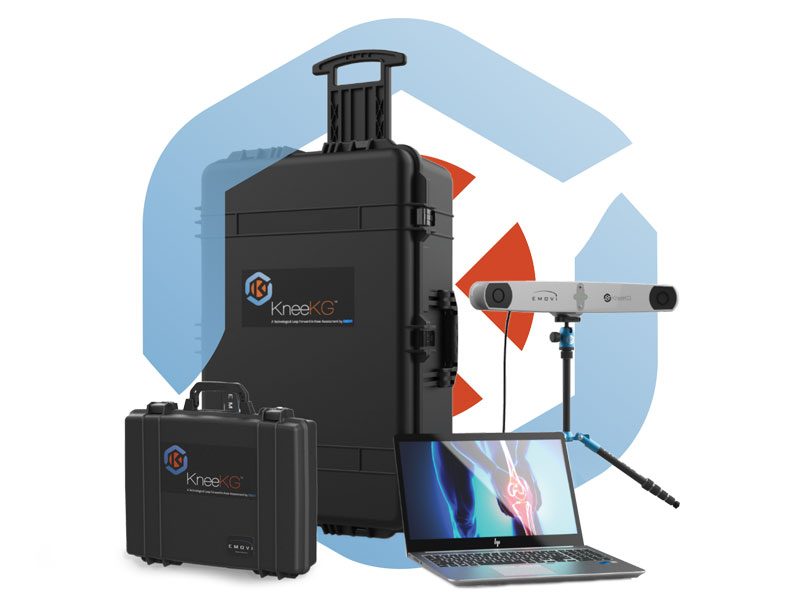
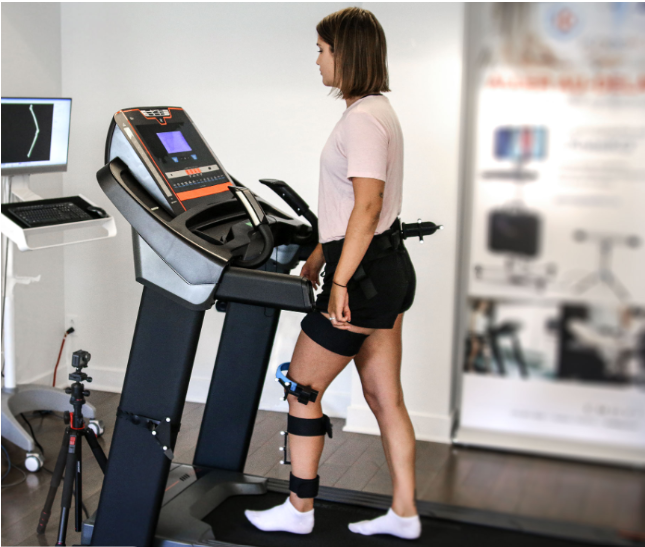
Traditional tools like X-rays and MRIs provide static images of the joint but don’t capture how the knee behaves in motion, where many issues and symptoms occur. To address this, Emovi developed KneeKG, a medical device that measures the knee’s movement in 3D while a patient is walking. Often compared to an electrocardiogram (EKG) for the heart, the device gives clinicians clearer insights into a patient’s joint function — often the root cause of pain — to support more informed treatment decision-making.

As the company evolved, it focused more closely on one of the fastest-growing pressures in global healthcare: total knee replacement surgeries. 

Demand for these procedures has been rising steadily and is expected to continue increasing. Aging populations are a major factor, alongside rising rates of obesity, which place additional stress on joints and lead to earlier interventions. At the same time, the number of surgeons is not keeping pace, adding further pressure on healthcare systems and increasing wait times.

By the early 2020s, Emovi had shifted its focus toward supporting patients undergoing total knee replacement, recognizing that functional data and earlier intervention could significantly improve outcomes.

Yann Lamarche, Emovi’s Director for Europe, has been leading the company’s international expansion, helping translate this clinical value into a strategy for growth abroad. 

Today, the system supports patients throughout the entire episode of care, from pre-surgical assessment to post-operative recovery. It enables clinicians to identify biomechanical risks to help them make more effective clinical decisions, like triaging which patients might require surgery, and which can be treated conservatively. The system can be operated by trained technicians, making it easier to integrate into clinical workflows and scale across healthcare settings.

Additionally, Emovi is developing solutions tailored to women, who are more likely to face knee injuries than men.

“We bring objective functional data to a process that often relies on trial and error,” Lamarche explains.

Beyond the clinic, Emovi’s platform includes a patient-facing app that leverages each patient’s biomechanics to support the generation of customized exercise programs. This encourages greater patient engagement, improves adherence to treatment plans, and increases the likelihood of successful recoveries. 

A shift toward Europe

By 2022, Emovi had reassessed where its solution would have the greatest impact.

While the United States had been an early focus, the team found that its value proposition to improve efficiency, reduce unnecessary procedures, and optimize patient outcomes, did not always align with the incentives of private healthcare systems.

In contrast, Europe’s public healthcare systems are structured around outcomes. Governments and providers are focused on reducing wait times, improving patient flow, and managing costs.

“In Europe, the doctors are more receptive to our arguments,” says Lamarche. 

This alignment led Emovi to prioritize several key European markets, including the United Kingdom (UK), France, Italy, Germany, and Switzerland.

However, entering these healthcare systems presented new challenges. Procurement processes vary significantly between countries and even between institutions.

“There’s no single way to enter a healthcare system,” Lamarche explains. “Every hospital is a new project.”

Working with Trade Commissioners

To navigate these complexities, Emovi built on its long-standing relationship with the Trade Commissioner Service, working more closely with us in 2022 as it began focusing on expansion into European markets.

A key part of that relationship was with Stephanie Archambault, a Trade Commissioner based at the Quebec Regional Office, who supported the company in refining its international strategy and identifying opportunities abroad. Through regular engagement, she helped connect Emovi with Trade Commissioners in priority markets.

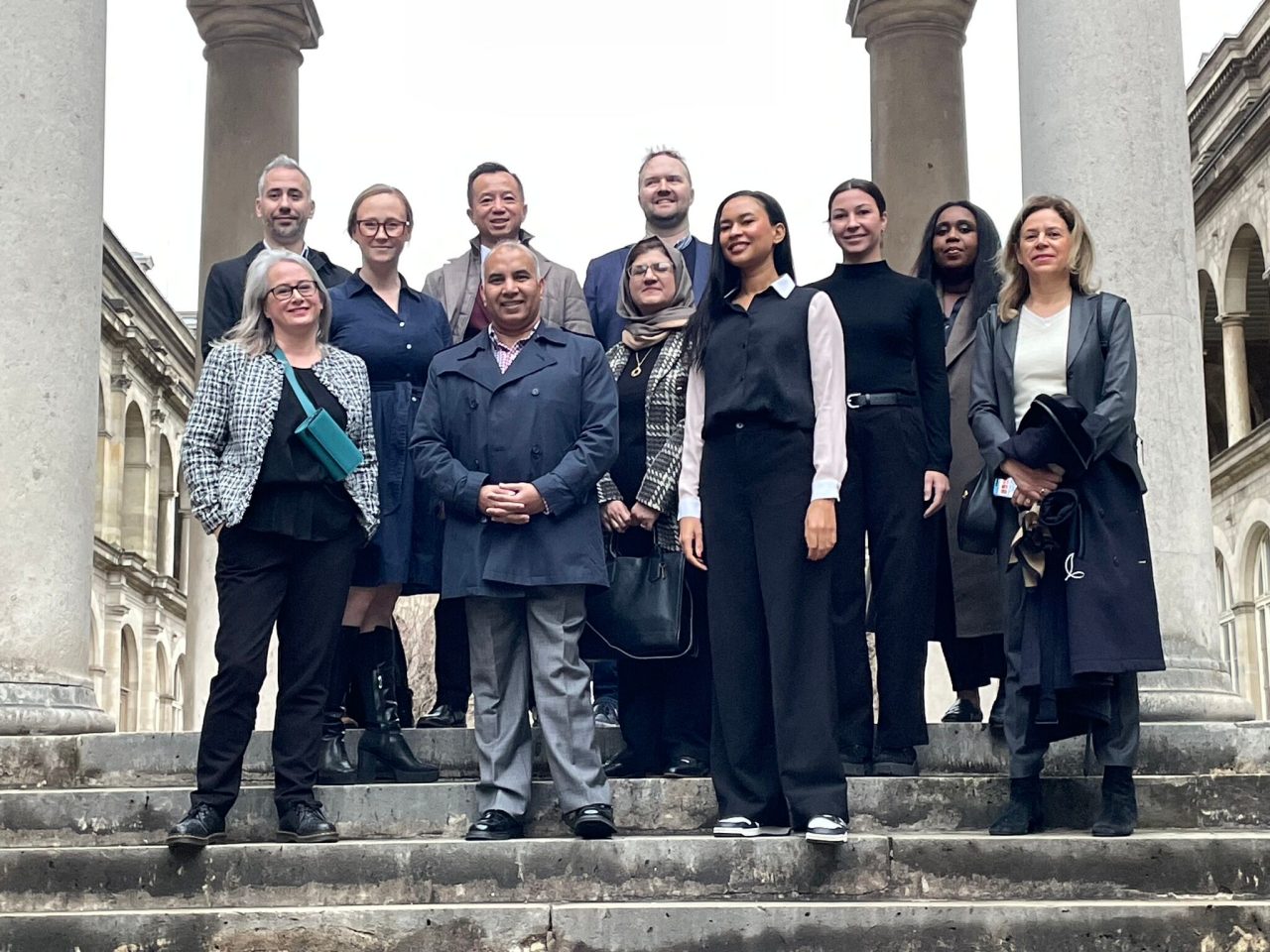
This included collaboration with Trade Commissioners on the ground in Europe, like Amir Golbang in London, Frederic Chieux in Paris, and Silke Ditgen in Düsseldorf, who provided in-market insights and guidance.

Rather than focusing solely on introductions, we played a broader advisory role, helping Emovi navigate healthcare systems, procurement processes, and how to position its solution effectively. 

“The biggest value is not just introductions,” Lamarche says. “It’s understanding how the market works and making better strategic decisions.”

Identifying best commercial approaches through Canadian Technology Accelerator programs

To build on this support, Emovi participated in several Canadian Technology Accelerator (CTA) programs, including the CTA in Philadelphia, the Boston Life Sciences CTA, the CTA in Düsseldorf, and the Femtech CTA in London and Paris. 

CTAs are global business development programs delivered by Trade Commissioners that help high-potential Canadian companies grow in international markets. Through mentorship, market intelligence, and access to networks of partners, clients, and investors, the program provides hands-on experience in key global tech hubs.

For Emovi, this support was particularly valuable in healthcare, where sales cycles are long and procurement pathways are highly structured.

“When you are in a CTA, you spend months evaluating a market in depth, from reimbursement to certification to how decisions are made,” Lamarche explains.

These programs helped Emovi identify key stakeholders and tailor its approach to each healthcare system.

In some cases, they also helped the company determine where not to invest its efforts, allowing it to focus its resources more effectively.

“For us, time and energy are critical,” Lamarche says. “Understanding where not to go is just as important as knowing where to go.”

Turning insights into results in the UK

By 2025, Emovi was ready to apply what it had learned.

Through participation in the Femtech CTA, the company developed a targeted strategy for entering the UK’s National Health Service (NHS).

Rather than attempting to scale across the entire country, Emovi focused on a single region, Birmingham.

Working with clinicians, regional innovation offices, and decision-makers across the West Midlands, the company aligned its solution with local priorities. 

This approach led to a major milestone in early 2026, when Emovi secured its first collaboration with Birmingham NHS Trust.

The deployment brought together multiple stakeholders across the region, creating a strong foundation for further adoption.

“If we hadn’t gone through the CTA, it would have been much harder,” Lamarche says. “We understood how the system works and how to move things forward.”

Importantly, this first implementation is just the beginning. By demonstrating success in Birmingham, Emovi is now positioned to expand across the broader NHS, using proven results and local validation to support additional deployments. 

Building momentum across Europe

Emovi has continued to build momentum across its priority European markets.

With ongoing support from Trade Commissioners, the company has built relationships with clinicians and institutions while advancing partnerships for distribution and real-world testing.

In France, participation in the Femtech CTA helped Emovi connect with major hospital networks, like AP-HP in Paris, one of Europe’s largest public hospital systems. Through these connections, the company is advancing opportunities for real-world testing and clinical validation within hospital settings. These partnerships are helping Emovi build credibility and prepare for broader adoption across the French healthcare system.

Rather than expanding broadly, the company is taking a focused, regional approach, prioritizing markets where it can build strong networks, generate clinical evidence, and create long-term impact. 

“We don’t want to be everywhere at once,” Lamarche says. “We want to grow region by region, where we can create real impact.”

Looking ahead

As healthcare systems face increasing pressure from rising demand and limited resources, Emovi’s solution is helping improve efficiency across the patient care pathway.

Looking ahead, the company plans to deepen its presence in Europe. By demonstrating measurable impact at the local level, starting with regions like Birmingham, the company aims to expand across broader healthcare networks, including additional NHS regions and other public health systems.

For Lamarche, one of the biggest lessons from this journey is the importance of understanding each market deeply and not trying to navigate complex systems alone.

“It’s never too early to start working with the TCS,” he says. “They give you the information you need to make the right decisions.” 

By combining innovation with a targeted international strategy, and leveraging our support, Emovi is positioning itself for continued growth in Europe and beyond.

We can help your business diversify

Looking to diversify your exports? We help Canadian companies of all sizes succeed in international markets through export advisory services, funding, accelerator programs, and tailored support at trade missions and events.

A solid diversification strategy can help you build long-term stability and global success. You can expand your client base and navigate challenges such as:

  • unexpected changes in market access
  • exchange-rate fluctuations
  • shifts in foreign-government policies

Explore resources from us and our partners to do business with the world.

Additional Information

Date published:

Hi! I'm Eva. Select the icon to start a chat with me.