From Toronto to the front lines: How Wuxly is exporting Canadian textile expertise

A decade ago, Wuxly was selling winter jackets. Today, it is supplying advanced textile systems for military operations in Canada and across Europe.

As defence demand grows, so does the need for partners that can deliver at scale, but breaking into these markets can mean navigating complex systems and established supply chains.

With support from Trade Commissioners, Wuxly has been able to bridge that gap, expanding into Europe and building relationships with allied partners.

A company built on an unexpected beginning

James Yurichuk with his wife Daniela, wearing Wuxly parkas.

Wuxly’s story began in 2015, when CEO and founder James Yurichuk, a former linebacker with the Toronto Argonauts, chose to design a winter jacket for his Brazilian girlfriend, experiencing her first Canadian winter at the time.

“I knew if she didn’t stay warm, she was going to leave,” he recalls. “So I decided to make her a jacket.”

Yurichuk had no experience creating a winter jacket. What followed was an unconventional crash course in textile design and manufacturing. He assembled a team, sourced materials, and worked through multiple iterations to create a coat built for extreme Canadian winters.

The result worked. His girlfriend stayed, they got married, and Wuxly was born. 

In the years that followed, the company grew as a direct-to-consumer outerwear brand, building its reputation on high-quality winter jackets. Along the way, it developed capabilities in material sourcing, pattern engineering, and manufacturing.

Today, Wuxly operates with a vertically integrated model supported by a network of Canadian suppliers, enabling rapid prototyping and scalable production. Its systems are designed for durability, modularity, and performance in environments as harsh as -50°C.

Entering the defence market, and navigating new challenges

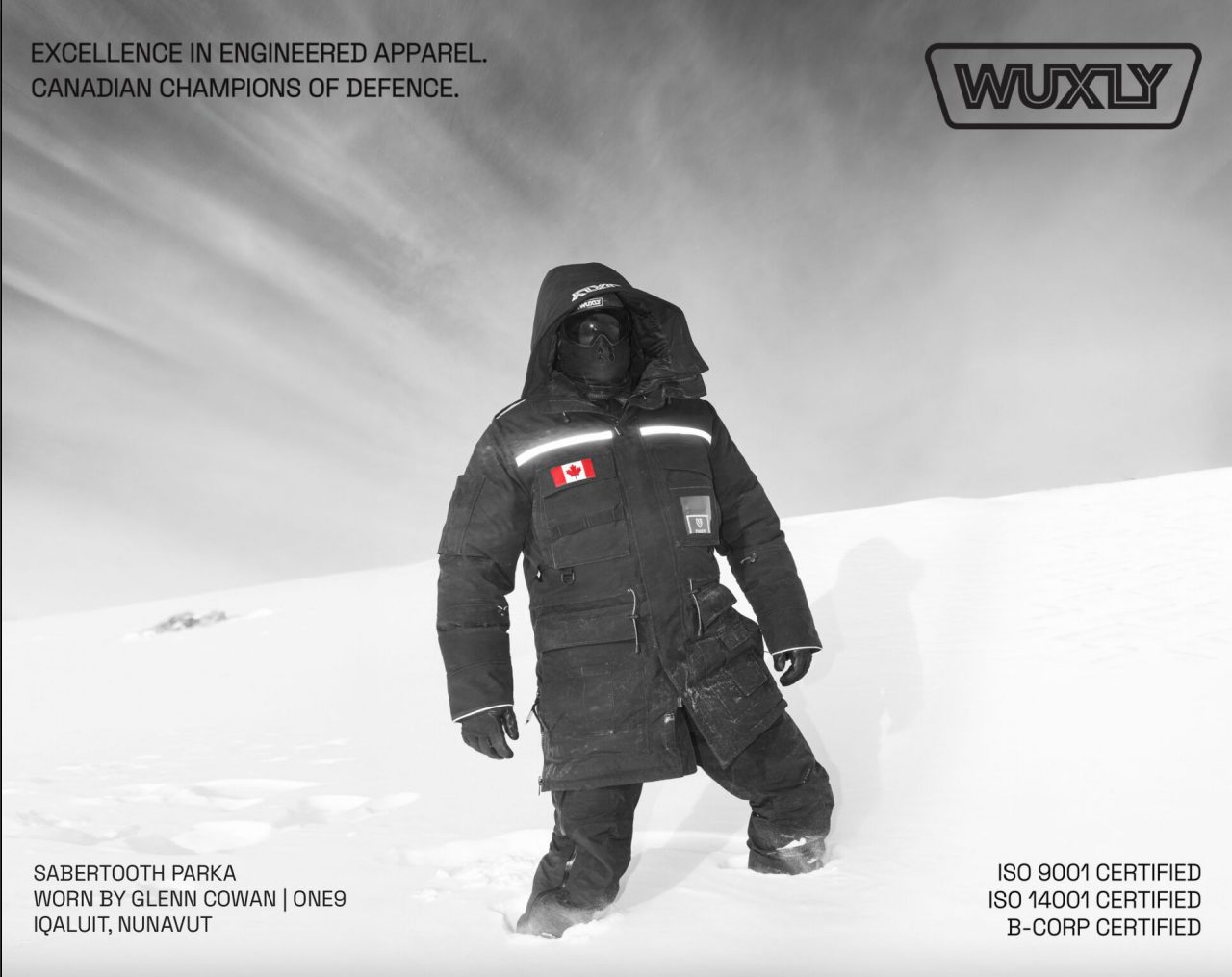
Wuxly tactical cold weather “Sabertooth” parka.

Wuxly’s transition into the defence market began in 2020 during the COVID-19 pandemic, when the company pivoted into government contracting to produce personal protective equipment.

That shift required adapting quickly to new standards and procurement processes. In doing so, Wuxly demonstrated its ability to meet government requirements and deliver at scale, positioning it to respond as defence demand surged in 2022.

As the war in Ukraine intensified, the company began supplying cold-weather gear, tactical soft goods, and female-specific combat uniforms designed for real operational conditions. However, expanding into international defence markets introduced a new level of complexity.

“When we first went to defence shows, we were green,” he explains. “We didn’t know what to expect. From export requirements to understanding who the key players were, there are hundreds of variables.”

Leveraging Trade Commissioner support to unlock opportunities

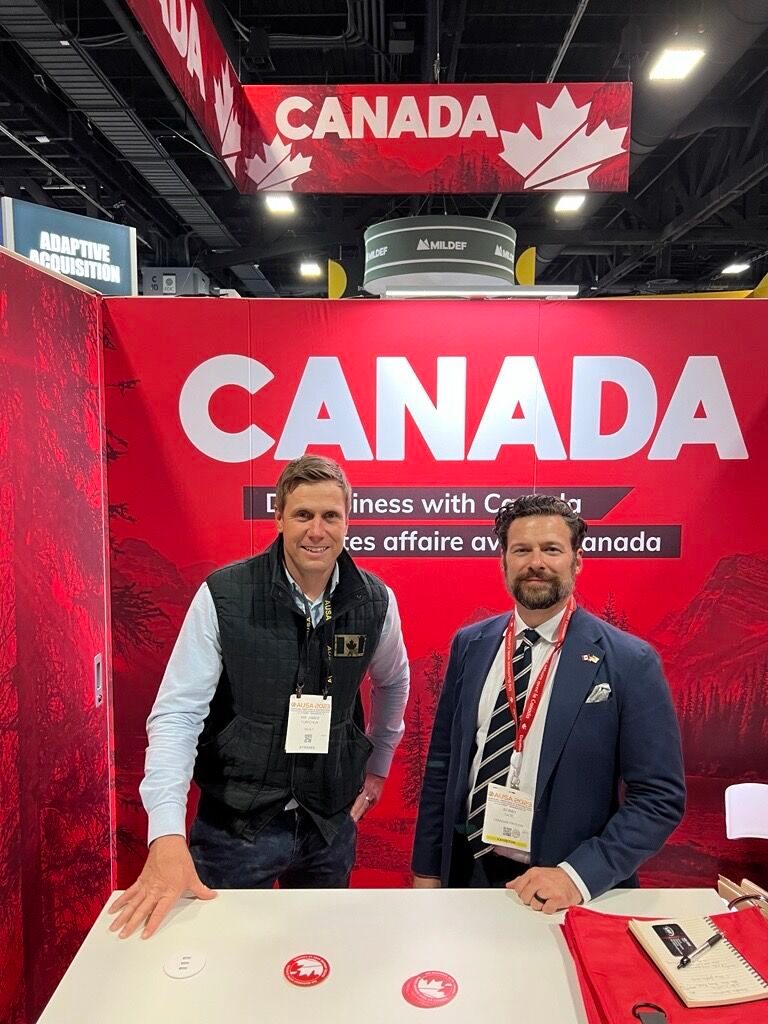
Yurichuk with Trade Commissioner, Robert Tate at the Canada Pavilion at AUSA 2026.

To navigate this new landscape, Wuxly turned to support from Trade Commissioners.

They had been working with Trade Commissioners specializing in consumer products since 2017 to support its international growth. These markets included the United States, Germany, Japan, Taiwan, India, China, Portugal, UK, Norway, Italy, Türkiye, and Finland. As the company expanded into defence, it began engaging with Trade Commissioners focused on the sector. 

“The Trade Commissioners act as a business development arm for us,” says Yurichuk. “They have eyes and ears on the ground, and that’s been a big benefit in understanding the market and getting in front of the right people.”

As Wuxly explored opportunities across Northern Europe, Trade Commissioners helped them understand how to approach complex defence markets, identify where its products could fit within existing supply chains, and navigate local business culture, an important factor when building relationships in new markets. 

We also supported Wuxly in refining its market approach, including focusing on regions with climates similar to Canada, with its strong expertise in cold-weather performance.

At major trade events such as Eurosatory in Paris and MSPO in Poland, Trade Commissioners facilitated meetings, provided access to Canada Pavilion space, and connected Wuxly with potential partners and government stakeholders.

This support proved particularly valuable in the Nordic region. Working closely with Trade Commissioner, Roy Kristiansen at the Canadian Embassy in Norway, Wuxly gained early visibility into the Nordic Combat Uniform program.

“They kept us informed as the requirements progressed and helped us understand who the main players were,” Yurichuk explains.

That insight allowed the company to engage partners at the right time and position itself within the supply chain, where it now contributes specialized textile components.

Trade Commissioners at the Canadian Embassy in Kyiv, including Yury Mardak, have also supported Wuxly’s growth in Ukraine by facilitating introductions to local partners and providing guidance on navigating procurement systems and emerging opportunities. 

“Canada has been incredibly supportive of companies like ours as we’ve grown,” says Yurichuk. “And in Europe, we’ve found a real openness to working with new partners who can deliver.”


A broader ecosystem of support

As Wuxly expanded internationally, other Canadian government supports from Canada's trade team also played a key role.

Wuxly is also part of the Vimy Forge Defence Accelerator, which connects Canadian companies working to strengthen national defence capabilities. Through this network, the company has been able to exchange insights and stay aligned with evolving defence priorities.

Together, these supports have helped the company move from early market exploration to active participation in global defence supply chains.

Delivering results at scale

Its involvement in Nordic supply chains has also been shaped by early visibility and connections, positioning the company within one of the most advanced and collaborative defence ecosystems in the world.

Trade shows have played a critical role in turning these connections into opportunities. Through participation in events such as Eurosatory, DALO Industry Days, and MSPO, with access to Canada Pavilion space and in-market guidance, Wuxly has connected with key partners and decision-makers.

These engagements have led to partnerships with European suppliers and manufacturers, as well as ongoing discussions around supply chain integration in markets such as Poland.

“Whenever we go to a market, it’s a massive disservice if we don’t activate the Trade Commissioner Service,” Yurichuk says. 

Looking ahead

Looking forward, Wuxly is focused on scaling its presence in markets that align with its core strengths, particularly in Nordic and Arctic environments.

Part of that continued growth is driven by the relationship between Wuxly’s consumer and defence lines. Insights from everyday users help refine product design, while lessons from high-performance defence applications influence its consumer products.

“It’s a feedback loop,” says Yurichuk. “We’re constantly learning from both sides and improving the system as a whole.”

Additionally, the company sees an opportunity to position Canada as a leader in advanced textile manufacturing for defence applications. With deep expertise in cold-weather performance and a strong domestic manufacturing base, Yurichuk believes Canadian firms are well positioned to succeed.

“We want to reawaken Canada as a leader in textile and apparel manufacturing,” he explains.

Advice for other exporters

For Canadian companies considering international expansion, particularly in defence, Yurichuk emphasizes the importance of preparation and early engagement.

“Get in touch with the Trade Commissioner Service early,” he says.

He also highlights the importance of leveraging on-the-ground expertise to reduce risk when entering new markets.

“Trade Commissioners help you prepare and give you the best shot at conducting business,” he says. 

Above all, he encourages companies to think globally from the outset.

“Look beyond Canada. Find where your product fits internationally.”

We can help your business diversify

Looking to diversify your exports? We help Canadian companies of all sizes succeed in international markets through export advisory services, funding, accelerator programs, and tailored support at trade missions and events.

A solid diversification strategy can help you build long-term stability and global success. You can expand your client base and navigate challenges such as:

  • unexpected changes in market access
  • exchange-rate fluctuations
  • shifts in foreign-government policies

Explore resources from us and our partners to do business with the world.

Additional Information

Date published:

Hi! I'm Eva. Select the icon to start a chat with me.